
Johannesburg Historical Tour
A specialist historical lens within the wider Johannesburg tour
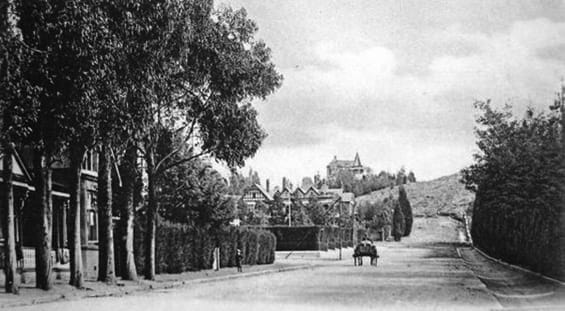
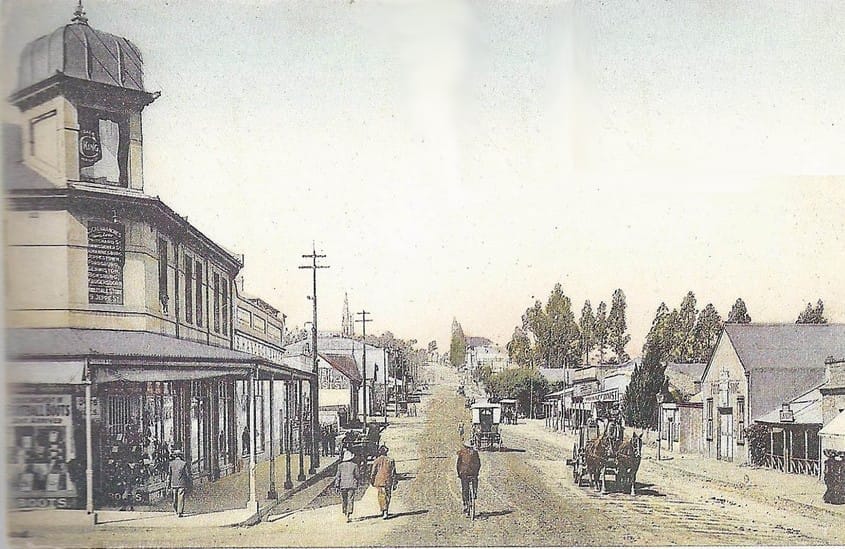
Johannesburg did not begin with apartheid. Ekala follows a much longer arc: the landscape before the city, early gold discoveries, the 1886 gold rush, the ZAR mining town, conflict, labour and migration, segregation, struggle and the city that followed.

At a glance
Before the city

Johannesburg begins before Johannesburg
The historical story starts with the landscape and the people already living in the region, then moves through the prospecting and smaller gold finds that preceded the discovery of the Main Reef. The Struben brothers’ Confidence Reef on the West Rand is part of that pre-1886 story, alongside other early prospectors and claims.
The important distinction is scale. Earlier finds did not create the city that followed. The Main Reef discoveries of 1886 changed the economic and political importance of the Witwatersrand and produced Johannesburg at extraordinary speed.
Gold creates a city
Gold changed far more than the skyline
Deep-level mining required capital, machinery, transport, water, power and a huge labour force. Mining houses, finance and supporting industries grew alongside compounds, working-class districts, wealthy suburbs and a city drawing people from across southern Africa and from Europe and elsewhere.
Ekala uses the mining landscape to explain why Johannesburg developed where it did, why the city’s geography still carries the imprint of the reef, and why gold cannot be separated from later questions of labour, race, land and political power.
For detailed mining interpretation, the Gold Mine Tours page owns that specialist subject.
ZAR & the Raid
The Jameson Raid belongs in Johannesburg history
By the 1890s Johannesburg had become a wealthy, politically difficult Uitlander city inside the Zuid-Afrikaansche Republiek. Mining interests, taxation, political rights, British imperial ambitions and opposition to Paul Kruger’s government became increasingly entangled.
The failed Jameson Raid of 1895–1896 and the planned Johannesburg uprising around it exposed those tensions. Leading members of the Reform Committee were tried; death sentences imposed on several leaders were later commuted. The episode damaged relations further and belongs in the build-up to the South African War, without pretending that one event alone explains the war.
Old Fort & war
A prison, a fort and a battlefield connection
Constitution Hill’s Old Fort is far more than the prison story most visitors see first. The original gaol was fortified after the Jameson Raid, its ramparts and military works completed before the South African War, and the complex passed into British hands when Johannesburg was occupied in 1900.
For battlefield clients, Johannesburg can provide the political, mining and military context before or after several days in KwaZulu-Natal, the Magaliesberg, the Cape Colony route or other campaign areas. The Battlefield Tours South Africa page remains the national battlefield owner.
Labour & segregation
Apartheid had foundations long before 1948
Johannesburg’s labour system and racial geography developed through many earlier laws, municipal controls, compounds, housing restrictions and economic pressures. The history should therefore not jump directly from the gold rush to formal apartheid.
The city also brought different communities into contact at extraordinary scale: African workers and migrants from across South Africa and neighbouring territories, European immigrants, Indian South Africans, Jewish communities and many others. Their opportunities and restrictions were profoundly unequal, but their presence is central to understanding the city.
20th century
Conflict did not end with the Boer War
The 1922 Rand Revolt is one example of the continuing conflict around mining, labour, race and political power. Later removals, segregation, apartheid, resistance and democratic change reshaped the same urban landscape again.
A Johannesburg historical tour may therefore connect mining sites, old suburbs, cemeteries, Constitution Hill, struggle locations and surviving pieces of the early city. Which of these are used depends on the historical question and the usable time rather than a compulsory attraction list.
From history to today
The point is to understand the city you are standing in now
Historical Johannesburg is not sealed off from the present. Mine dumps, transport lines, settlement patterns, inequality, migration and the location of old institutions still help explain Johannesburg today.
Ekala’s broad Johannesburg Tour remains the main page when the client wants historical, cultural and contemporary Johannesburg together. This specialist page is for travellers whose primary interest is the city’s historical development.
Children & specialist needs
Historical depth can be adapted without turning history into trivia
Children can respond extremely well when the story is built around people, choices, places and visible evidence rather than a lecture of dates. Visual impairment can also be approached through descriptive interpretation on suitable routes, but underlying sites and terrain still require individual assessment.
Ekala does not promise that every historical site is suitable for every traveller. Functional needs should be supplied from the enquiry stage so the route can be built around what is realistically valuable.
Johannesburg Tours
The broad money page combines historical, cultural and contemporary Johannesburg.
Historical Tours
Use the historical hub to move into Mandela, Gandhi, Constitution Hill, battlefields and other specialist themes.
Build the historical route around your interest
Tell Ekala whether your priority is gold, early Johannesburg, ZAR politics, the South African War, labour, segregation, struggle history, family history or a broader chronological overview.